Rethinking Back Pain: The Role of Fascia

Today I want to talk about something I’ve seen as a primary source of pain in countless patients—yet it’s rarely mentioned in medical school or by most doctors. While I’m still exploring the best ways to keep fascia healthy over the long term—through stabilizing exercises, muscle balancing, and movement practices—I’ve consistently found that massage, cupping, and acupuncture can bring meaningful relief.

For now, let’s start with the basics: what fascia is, and more specifically, the type I most often hear patients describe as the exact spot of their pain—the thoracolumbar fascia.


What Is Fascia?

Fascia is a type of connective tissue in your body—it’s kind of like a full-body spiderweb made of collagen that surrounds and supports everything: muscles, bones, nerves, blood vessels, and organs. It’s not just passive packing material—it’s dynamic, sensitive, and deeply involved in how your body moves and feels.

🧠 Key Facts

  • Structure: Tough but flexible, fascia is made mostly of collagen fibers arranged in a multidirectional web.
  • Function: It holds things in place, transmits force, reduces friction, and allows structures to slide smoothly over each other.
  • Layers:
    • Superficial fascia: just beneath the skin, often containing fat.
    • Deep fascia: wraps around muscles and bones.
    • Visceral fascia: encases internal organs.

Fascia can get tight, stuck, or inflamed, contributing to pain and mobility restrictions—even far from the original source. It’s richly innervated, meaning it plays a major role in proprioception and pain perception. Manual therapies (like massage, myofascial release, or acupuncture) often aim to restore its glide and elasticity.


🧱 Thoracolumbar Fascia (TLF)

The thoracolumbar fascia (TLF) is a major fascial structure in your lower back—like a thick, multilayered tension bridge connecting your upper and lower body. It’s central to stability, movement, and force transmission, especially through your core and spine.

📍 Location

The TLF spans from the thoracic spine to the sacrum, stretching laterally to the ribs and hips, and includes three layers:

  • Posterior layer: Just under the skin and superficial muscles like the latissimus dorsi.
  • Middle layer: Between the deep back muscles (e.g., multifidus) and quadratus lumborum.
  • Anterior layer: Deepest, lying in front of quadratus lumborum and connecting to the psoas.

🏋️‍♂️ Function and Importance

  1. Core Stability:
    Acts like a natural weightlifting belt by anchoring key muscles:
    • Latissimus dorsi
    • Gluteus maximus
    • Transversus abdominis
    • Internal obliques
      These muscles create tension through the fascia to stabilize the spine.
  2. Force Transmission:
    Transfers power between upper and lower body—especially important in walking, running, lifting, and rotation.
  3. Back Pain:
    Adhesions or tension in the TLF can reduce mobility and contribute to chronic or mechanical low back pain.
  4. Sensory Function:
    Fascia is packed with sensory nerves. Dysfunction here doesn’t just feel tight—it can generate real pain and disrupt body awareness.

🔧 Clinical Implications

  • Manual therapies (massage, cupping, acupuncture) can reduce tension and improve glide between fascial layers.
  • Engaging muscles like the transversus abdominis through exercises (planks, dead bugs, etc.) strengthens the fascial tensioning system.
  • Dysfunction in the glutes, lats, or obliques can create asymmetrical pulls, affecting spinal mechanics via the TLF.

🧩 Summary

The thoracolumbar fascia acts as a central tension system for the torso, tying together posture, movement, stability, and sensation. If something’s off in your core, hips, or back, chances are the TLF is part of the story.

PTSD, Healing & Happy Tears

Crying at the Happy Ending

“Crying at the Happy Ending” is an article by psychoanalyst Joseph Weiss (1952), popularized in Michael Bader’s 2014 article on Psychology Today. Its a powerful piece that explores why, even in the context of watching a movie, we often wait until a resolution to let ourselves feel—and cry.

The core idea is:

  • During the tension or crisis, our nervous system is in survival mode—fight, flight, freeze—so we suppress emotions to stay focused and safe.
  • Once the conflict resolves, we subconsciously perceive safety, and emotions we’ve been holding back—sadness, relief—can finally surface. That release often comes as tears at the happy ending.

Studies and later commentary support this “safety-signal” theory. A neuroscientific review explains that safety signals—learned cues predicting the absence of threat—actively inhibit fear and stress responses in humans and animals. In conditions like PTSD, this safety learning is often impaired, making it difficult to shift out of fear mode (Hamm & Jentsch, 2012).

This idea of emotional release being tied to a sense of safety? It’s not just emotional—it’s physiological. Let’s talk nervous system…


The Body Keeps the Score

As Bessel van der Kolk wrote in The Body Keeps the Score, trauma and chronic stress don’t just live in the mind. They live in the body.

Muscles clench. Breathing gets shallow. The gut stops working smoothly.
We might “move on” intellectually, but the body hasn’t gotten the memo.
Why? Because safety isn’t an idea. It’s a felt experience.

And until the body believes it’s safe, it won’t let go—of tension, pain, or emotion.


This Is the Core of My Work

In my opinion, my #1 priority in the clinic is to create space for my patients to experience a parasympathetic, relaxed sense of safety.

I will often tell my patients, “I take all snoring and drooling as compliments”. And many patients do fall asleep during massage, acupuncture, or cupping treatments.

Sometimes my patients feel more comfortable talking about their lives rather than hitting snooze, and I think that can be helpful as well. The combination of nervous system ease, physical comfort, and open conversation creates a potent cocktail for healing—one that includes both mind and body.

When things get complicated, I return to what I believe is most essential in healing—and in both my personal and professional experience, safety is key.

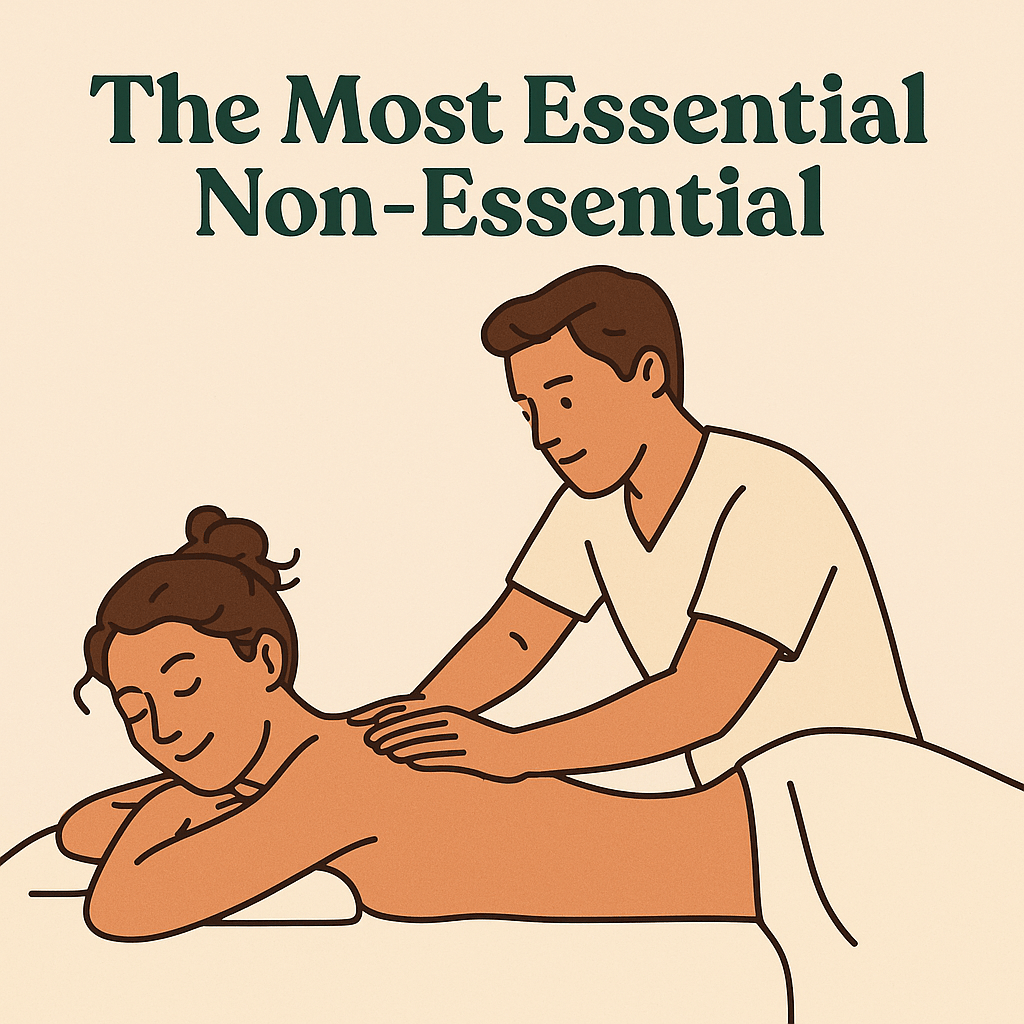
More Than Relaxation: How Massage Supports Whole-Body Health

Most people know massage feels good. What fewer realize—especially here in the U.S.—is how much real, measurable benefit it can have on your health. In places like Norway or much of Western Europe, massage is often seen as a regular part of staying well, not just an occasional treat. But in America, it’s still mostly viewed as a luxury or indulgence. The reality? Massage can help with chronic pain, poor sleep, anxiety, and even immune function. If you’ve ever walked away from a session feeling clearer, calmer, or more at home in your body, that wasn’t just in your head. There’s solid research behind those effects—and for a lot of people, massage is more than relaxation. It’s part of how they stay healthy.


1. Reduces Stress and Lowers Cortisol
Massage therapy has been shown to significantly reduce cortisol levels and increase serotonin and dopamine.

[Field, 2005 – Int J Neurosci]
[Rapaport et al., 2010 – J Altern Complement Med]

2. Alleviates Muscle Tension and Improves Range of Motion
Regular massage decreases muscle stiffness and improves joint flexibility, supporting athletic recovery and injury prevention.

[Weerapong et al., 2005 – Sports Med]

3. Improves Sleep Quality
Massage has been shown to improve both the depth and duration of sleep, including an increase in delta wave activity—the kind linked to deep, restorative rest.

[Richards et al., 2000 – J Clin Rheumatol]
[Field et al., 1998 – Early Hum Dev]

4. Reduces Pain—Both Acute and Chronic
Massage can reduce chronic low back pain, neck pain, fibromyalgia symptoms, and postoperative pain.

[Furlan et al., 2008 – Cochrane Review]
[Moyer et al., 2004 – Pain Med]

5. Supports Mental Health: Anxiety & Depression
Massage therapy can reduce symptoms of anxiety and depression, likely via nervous system regulation and oxytocin release.

[Moyer et al., 2004 – Psychol Bull]
[Field et al., 1996 – Int J Neurosci]

6. Boosts Immune Function
Massage may enhance immune markers like natural killer cells and lymphocyte count—particularly helpful in people under stress.

[Field et al., 2005 – J Altern Complement Med]


Final Thoughts
Whether you’re in pain, managing stress, or simply trying to stay well, massage therapy can be a valuable part of your routine. For anyone looking to prioritize feeling better, massage is a surprisingly prudent choice as a regular therapy.