Rethinking Back Pain: The Role of Fascia

Today I want to talk about something I’ve seen as a primary source of pain in countless patients—yet it’s rarely mentioned in medical school or by most doctors. While I’m still exploring the best ways to keep fascia healthy over the long term—through stabilizing exercises, muscle balancing, and movement practices—I’ve consistently found that massage, cupping, and acupuncture can bring meaningful relief.

For now, let’s start with the basics: what fascia is, and more specifically, the type I most often hear patients describe as the exact spot of their pain—the thoracolumbar fascia.


What Is Fascia?

Fascia is a type of connective tissue in your body—it’s kind of like a full-body spiderweb made of collagen that surrounds and supports everything: muscles, bones, nerves, blood vessels, and organs. It’s not just passive packing material—it’s dynamic, sensitive, and deeply involved in how your body moves and feels.

🧠 Key Facts

  • Structure: Tough but flexible, fascia is made mostly of collagen fibers arranged in a multidirectional web.
  • Function: It holds things in place, transmits force, reduces friction, and allows structures to slide smoothly over each other.
  • Layers:
    • Superficial fascia: just beneath the skin, often containing fat.
    • Deep fascia: wraps around muscles and bones.
    • Visceral fascia: encases internal organs.

Fascia can get tight, stuck, or inflamed, contributing to pain and mobility restrictions—even far from the original source. It’s richly innervated, meaning it plays a major role in proprioception and pain perception. Manual therapies (like massage, myofascial release, or acupuncture) often aim to restore its glide and elasticity.


🧱 Thoracolumbar Fascia (TLF)

The thoracolumbar fascia (TLF) is a major fascial structure in your lower back—like a thick, multilayered tension bridge connecting your upper and lower body. It’s central to stability, movement, and force transmission, especially through your core and spine.

📍 Location

The TLF spans from the thoracic spine to the sacrum, stretching laterally to the ribs and hips, and includes three layers:

  • Posterior layer: Just under the skin and superficial muscles like the latissimus dorsi.
  • Middle layer: Between the deep back muscles (e.g., multifidus) and quadratus lumborum.
  • Anterior layer: Deepest, lying in front of quadratus lumborum and connecting to the psoas.

🏋️‍♂️ Function and Importance

  1. Core Stability:
    Acts like a natural weightlifting belt by anchoring key muscles:
    • Latissimus dorsi
    • Gluteus maximus
    • Transversus abdominis
    • Internal obliques
      These muscles create tension through the fascia to stabilize the spine.
  2. Force Transmission:
    Transfers power between upper and lower body—especially important in walking, running, lifting, and rotation.
  3. Back Pain:
    Adhesions or tension in the TLF can reduce mobility and contribute to chronic or mechanical low back pain.
  4. Sensory Function:
    Fascia is packed with sensory nerves. Dysfunction here doesn’t just feel tight—it can generate real pain and disrupt body awareness.

🔧 Clinical Implications

  • Manual therapies (massage, cupping, acupuncture) can reduce tension and improve glide between fascial layers.
  • Engaging muscles like the transversus abdominis through exercises (planks, dead bugs, etc.) strengthens the fascial tensioning system.
  • Dysfunction in the glutes, lats, or obliques can create asymmetrical pulls, affecting spinal mechanics via the TLF.

🧩 Summary

The thoracolumbar fascia acts as a central tension system for the torso, tying together posture, movement, stability, and sensation. If something’s off in your core, hips, or back, chances are the TLF is part of the story.

Back Pain Prevention – The 3 Exercises Spine Experts Trust

The McGill Big 3 are a trio of core stabilization exercises developed by Dr. Stuart McGill, a leading spine biomechanist. These exercises aim to build core endurance and protect the spine by training the muscles that support it — without placing excessive stress on the lower back.

They are especially popular in rehab, physical therapy, and strength coaching communities for people recovering from low back pain or looking to prevent it.


💪 The McGill Big 3

  1. Curl-Up
    • Target: Rectus abdominis (front of the core)
    • How to do it:
      • Lie on your back with one leg straight and the other bent (foot flat).
      • Hands go under your lower back to maintain a neutral spine.
      • Gently lift your head, shoulders, and chest slightly off the floor — just enough to engage the abs — then hold for 10 seconds.
      • Avoid flexing the spine like a crunch. Keep the neck in a neutral position.
    • Purpose: Builds abdominal endurance without stressing the spine via flexion.
  2. Side Plank
    • Target: Obliques and lateral stabilizers
    • How to do it:
      • Lie on your side with your elbow under your shoulder, legs straight, top foot in front of the bottom.
      • Lift hips to form a straight line from shoulders to feet.
      • Hold for 10 seconds (or longer, if trained), then switch sides.
    • Modifications: Beginners can bend knees or use a hand for assistance.
  3. Bird Dog
    • Target: Posterior chain (low back, glutes, shoulders)
    • How to do it:
      • Start in tabletop position (hands and knees).
      • Extend one arm forward and the opposite leg back.
      • Keep hips and shoulders square — no twisting.
      • Hold for 10 seconds, then switch sides.
    • Focus: Controlled movement, minimal spinal motion.

🔁 Programming Notes

  • McGill suggests: 3–5 reps per side, 10-second holds, multiple sets if needed.
  • Quality > quantity: These exercises emphasize stability and control, not brute strength or fatigue.
  • Often used as a warm-up or daily core routine, especially in rehab settings.

For more information and visuals visit:
https://squatuniversity.com/2018/06/21/the-mcgill-big-3-for-core-stability/

PTSD, Healing & Happy Tears

Crying at the Happy Ending

“Crying at the Happy Ending” is an article by psychoanalyst Joseph Weiss (1952), popularized in Michael Bader’s 2014 article on Psychology Today. Its a powerful piece that explores why, even in the context of watching a movie, we often wait until a resolution to let ourselves feel—and cry.

The core idea is:

  • During the tension or crisis, our nervous system is in survival mode—fight, flight, freeze—so we suppress emotions to stay focused and safe.
  • Once the conflict resolves, we subconsciously perceive safety, and emotions we’ve been holding back—sadness, relief—can finally surface. That release often comes as tears at the happy ending.

Studies and later commentary support this “safety-signal” theory. A neuroscientific review explains that safety signals—learned cues predicting the absence of threat—actively inhibit fear and stress responses in humans and animals. In conditions like PTSD, this safety learning is often impaired, making it difficult to shift out of fear mode (Hamm & Jentsch, 2012).

This idea of emotional release being tied to a sense of safety? It’s not just emotional—it’s physiological. Let’s talk nervous system…


The Body Keeps the Score

As Bessel van der Kolk wrote in The Body Keeps the Score, trauma and chronic stress don’t just live in the mind. They live in the body.

Muscles clench. Breathing gets shallow. The gut stops working smoothly.
We might “move on” intellectually, but the body hasn’t gotten the memo.
Why? Because safety isn’t an idea. It’s a felt experience.

And until the body believes it’s safe, it won’t let go—of tension, pain, or emotion.


This Is the Core of My Work

In my opinion, my #1 priority in the clinic is to create space for my patients to experience a parasympathetic, relaxed sense of safety.

I will often tell my patients, “I take all snoring and drooling as compliments”. And many patients do fall asleep during massage, acupuncture, or cupping treatments.

Sometimes my patients feel more comfortable talking about their lives rather than hitting snooze, and I think that can be helpful as well. The combination of nervous system ease, physical comfort, and open conversation creates a potent cocktail for healing—one that includes both mind and body.

When things get complicated, I return to what I believe is most essential in healing—and in both my personal and professional experience, safety is key.

More Than Relaxation: How Massage Supports Whole-Body Health

Most people know massage feels good. What fewer realize—especially here in the U.S.—is how much real, measurable benefit it can have on your health. In places like Norway or much of Western Europe, massage is often seen as a regular part of staying well, not just an occasional treat. But in America, it’s still mostly viewed as a luxury or indulgence. The reality? Massage can help with chronic pain, poor sleep, anxiety, and even immune function. If you’ve ever walked away from a session feeling clearer, calmer, or more at home in your body, that wasn’t just in your head. There’s solid research behind those effects—and for a lot of people, massage is more than relaxation. It’s part of how they stay healthy.


1. Reduces Stress and Lowers Cortisol
Massage therapy has been shown to significantly reduce cortisol levels and increase serotonin and dopamine.

[Field, 2005 – Int J Neurosci]
[Rapaport et al., 2010 – J Altern Complement Med]

2. Alleviates Muscle Tension and Improves Range of Motion
Regular massage decreases muscle stiffness and improves joint flexibility, supporting athletic recovery and injury prevention.

[Weerapong et al., 2005 – Sports Med]

3. Improves Sleep Quality
Massage has been shown to improve both the depth and duration of sleep, including an increase in delta wave activity—the kind linked to deep, restorative rest.

[Richards et al., 2000 – J Clin Rheumatol]
[Field et al., 1998 – Early Hum Dev]

4. Reduces Pain—Both Acute and Chronic
Massage can reduce chronic low back pain, neck pain, fibromyalgia symptoms, and postoperative pain.

[Furlan et al., 2008 – Cochrane Review]
[Moyer et al., 2004 – Pain Med]

5. Supports Mental Health: Anxiety & Depression
Massage therapy can reduce symptoms of anxiety and depression, likely via nervous system regulation and oxytocin release.

[Moyer et al., 2004 – Psychol Bull]
[Field et al., 1996 – Int J Neurosci]

6. Boosts Immune Function
Massage may enhance immune markers like natural killer cells and lymphocyte count—particularly helpful in people under stress.

[Field et al., 2005 – J Altern Complement Med]


Final Thoughts
Whether you’re in pain, managing stress, or simply trying to stay well, massage therapy can be a valuable part of your routine. For anyone looking to prioritize feeling better, massage is a surprisingly prudent choice as a regular therapy.

From Needle to Nervous System: How Acupuncture Reduces Pain

I really enjoyed working on this post—it’s been a while since I sat down and revisited all the specific ways acupuncture helps the body heal. One of my first thoughts was:
“Oh! Look at all these great things I do at work each day. Nice!”

In the clinic, I usually keep things broad when explaining how acupuncture works. That’s partly to keep it relatable for my patients, but if I’m honest, sometimes I also forget the specifics—I’m focused on the work itself, not the mechanisms underneath.

Before we get into what the research says, I want to share a metaphor I often use to explain how acupuncture helps reduce pain.


🏋️‍♂️ Acupuncture as Exercise

Strength training is a hobby of mine, and so I’ve learned that when you do a bicep curl, you’re not immediately growing your biceps brachii muscle. You’re causing micro-tears, triggering a release of endorphins, and setting off a healing cascade: increased circulation, immune activation, growth hormone, tissue repair. Most of that “magic” happens later—especially during sleep—when the body adapts to the stress you just gave it.

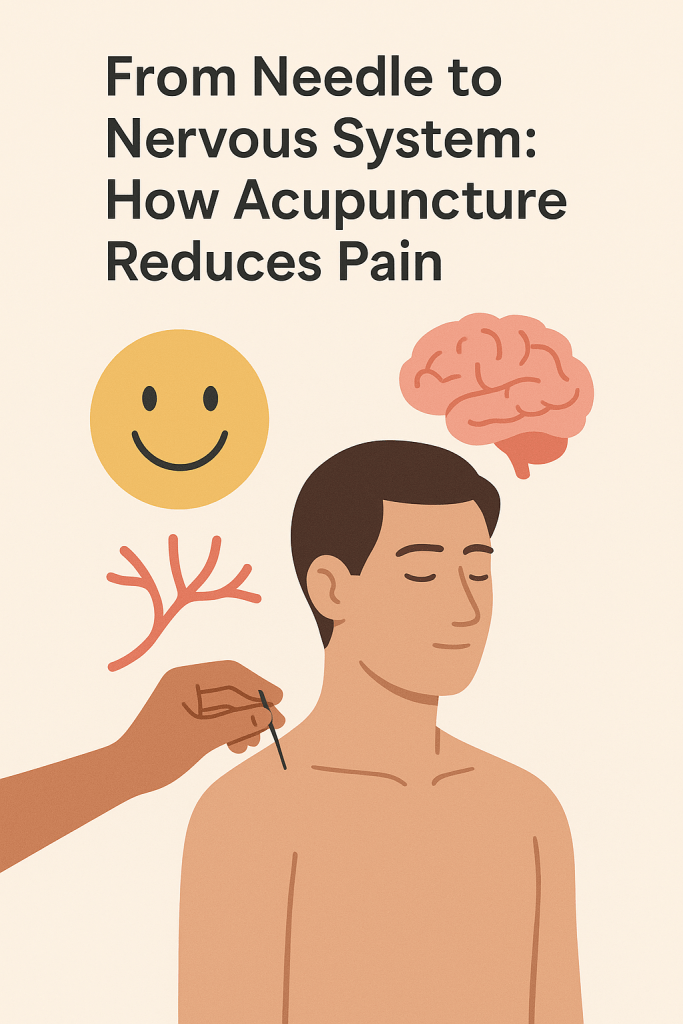
Acupuncture works similarly. When a needle enters the tissue, it’s a gentle, targeted disruption—a stimulus that the body responds to with a series of healing actions. As you’ll see below, that response includes everything from increased blood flow to reduced inflammation to the release of your own natural painkillers.

So what we’re doing is twofold:

  • Immediate relief – Downregulating pain signaling in the nervous system.
  • Long-term healing – Supporting circulation, reducing inflammation, and easing tension so real progress can happen over time.

Acupuncture can support many different conditions, but for today—and for the primary focus of my clinic—we’re talking pain.


📊 Summary: How Acupuncture Helps Reduce Pain

EffectMechanismWhat Research Shows
⬆️ Local blood flowVasodilation via neuropeptides (like CGRP, Substance P) and nitric oxideIncreased circulation at needled sites; enhanced healing response
🌿 Muscle/fascia releaseMechanical stimulation of connective tissue and myofascial modulationNeedles create local tissue stretch and relaxation, reducing muscle tone and tightness
😊 Pain reliefRelease of endogenous opioids (endorphins, enkephalins, etc.)Natural painkillers released; pain pathways inhibited in brain and spinal cord
🔥 Inflammation reductionSuppression of pro-inflammatory cytokines; immune system modulationLower levels of IL-6, TNF-α, and other inflammatory markers after acupuncture
🧠 Nervous system shiftActivation of parasympathetic system; modulation of brain pain perceptionChanges in limbic system and somatosensory cortex; improved nerve conduction (e.g., CTS)

🧠 Digging Into the Research

1. Nerve Stimulation & Circulation

Inserting a needle activates local sensory nerves, triggering neuropeptide release (e.g., Substance P, CGRP), which leads to vasodilation and increased blood flow around the point.
At the Zusanli point (ST36), stimulation increases cerebral blood flow via nitric‑oxide–mediated vasodilation and reduces inflammatory markers like IL‑6.

2. Muscle Relaxation & Connective Tissue Response

Research indicates that needle insertion mechanically deforms tissues—including fascia—which may relax tight muscle fibers and reset tension via connective‑tissue modulation.

3. Endorphin & Opioid Peptide Release

Acupuncture—especially electro-acupuncture—stimulates the release of endogenous opioids like enkephalins, β‑endorphin, endomorphin, and dynorphin. Different stimulation frequencies affect which peptides are released. These peptides block pain signals in both the central and peripheral nervous systems, similar to morphine, but naturally produced by your body.

4. Anti-Inflammatory Effects

Acupuncture exerts strong anti-inflammatory effects by reducing cytokine release, suppressing inflammatory cell activity, and recruiting neutrophils that help resolve local inflammation.
In stroke patients, it has even been shown to improve neurological recovery by dampening inflammatory processes.

5. Modulation of Pain Signal Processing

There’s evidence that acupuncture inhibits hyperactive pain pathways: reducing activity in pain-related ion channels, suppressing glial cell activation, and stimulating descending inhibitory systems that release serotonin, norepinephrine, and opioid peptides.
In carpal tunnel syndrome, real acupuncture (especially electro-acu) improved nerve conduction and triggered cortical brain remodeling—while sham acupuncture yielded only temporary symptom relief.


🧾 Conclusion

The World Health Organization (WHO) has recognized acupuncture as a potentially effective treatment for over 100 conditions—ranging from migraines and digestive issues to anxiety, allergies, and infertility. Each of those conditions involves its own unique physiological patterns, and in each case acupuncture works through a wide range of mechanisms to support the body’s return to balance.

For today though, addressing some of the ways in which acupuncture helps with pain seems like plenty—both by calming the nervous system and by supporting long-term healing where the body needs it most.

Community, Solitude, and Health: A More Nuanced View

“Solitude can be enriching or impoverishing. Its impact on well-being depends critically on the degree of choice, personal comfort with aloneness, and ability to self-regulate emotions.”
Thomas NK, Azmitia M. Psychological Benefits of Solitude: Perspectives from Social and Personality Psychology. PSPR. 2018.

“Negative social relationships predict increased inflammation and poorer health outcomes, sometimes more so than a lack of social relationships.”
Uchino BN, Social Support and Health: A Review of Physiological Processes. Health Psychol. 2006.

When the idea of Blue Zones was introduced to the public in 2008, it was something of a revelation. The notion that tight-knit community life could be directly tied to longevity felt both intuitive and groundbreaking. Across these pockets of the world where people routinely live past 100, strong social bonds weren’t just a pleasant feature — they seemed to be a key part of the longevity formula.

Since then, the idea has spread, but often in reverse: we now hear more about loneliness and its connection to poor health outcomes. Unfortunately, much of the popular conversation has drifted into oversimplification. One of the most popular headlines that’s emerged from this research is the claim that loneliness is as bad for your health as smoking 15 cigarettes a day.

The comparison comes from the rough equivalence between two separate findings:

  • According to a 2010 meta-analysis, strong social relationships are linked to a roughly 50% lower risk of all-cause mortality.
  • Smoking 15 cigarettes a day is associated with about a 50% increase in mortality risk.

Superficially, these numbers look similar — but they aren’t logically interchangeable. This kind of equivalence ignores the massive individual variability in both smoking outcomes and the experience of social connection. It makes for an alarming slogan, not a nuanced understanding.

Worse, the framing itself can be psychologically harmful. Imagine telling someone who is already struggling with isolation or loss that their loneliness is now actively destroying their health and doing so as badly as a pack-a-day habit. Rather than helping, this can compound shame and helplessness, making the path toward connection feel even heavier.

The deeper truth is this: it’s not simply how many people surround you, or whether you are in a relationship, that drives well-being. It’s the quality of the relationships you maintain — and even more so, your inner relationship with yourself. A life filled with superficial or draining connections can be as stressful as isolation. Meanwhile, peaceful solitude and a calm, integrated state of mind can support health in profound ways. It is not the absence of company, but the presence of distressing loneliness that carries risk.

This is what I was alluding to by opening an article on community with two pro-solitude research quotes: mindset matters. As much as it might surprise those still holding to an outdated “body as machine” paradigm, there is now a wealth of evidence showing that how we feel — our emotional landscape, our sense of ease or distress — directly influences health outcomes. For many, social connection is a vital source of positive emotion and physiological support. But it’s important to note that introverts aren’t quietly dying off, either. In fact, one of the most life-affirming relationships we can cultivate is the one we have with ourselves.

Ultimately, the research is clear: both connection with others and peace within oneself can support better health. It’s not about chasing a specific number of relationships or fearing time alone — it’s about fostering the kinds of relationships, internal and external, that help your nervous system settle into safety and ease.

Stress Management – why the American work ethic is antithetical to wellness + tips

Below is just five of many high quality studies linking chronic work stress to serious physical and mental health outcomes:

1) A 2016 meta-analysis in The Lancet found that working more than 55 hours a week was associated with a 33% increased risk of stroke and a 13% higher risk of coronary heart disease compared to those working 35–40 hours per week (Kivimäki et al., 2015).
 

2) A longitudinal study in Journal of Occupational Health Psychology found that chronic job strain (high demands, low control) predicted depressive symptoms and fatigue even years later.
Melchior et al., 2007
 

3) A 10-year study in Circulation found that work stress significantly increased risk for metabolic syndrome, including hypertension, insulin resistance, and abdominal obesity.
“Work stress, particularly effort-reward imbalance, was associated with a 2x increased risk of developing metabolic syndrome.”
Chandola et al., 2006
 

4) The INTERHEART study (one of the largest global case-control studies on heart disease) found psychosocial stress (including workplace stress) was as predictive of myocardial infarction as traditional risk factors like smoking or diabetes.
“Chronic stressors, including those from work and home life, were associated with a >2-fold increased risk of heart attack.”
Rosengren et al., 2004
 

5) A 2025 study published in Occupational & Environmental Medicine found that individuals working more than 52 hours per week exhibited structural changes in 17 brain regions associated with executive function and emotional regulation. These alterations may lead to reduced emotional stability, increased anxiety, and challenges in managing interpersonal relationships. The researchers emphasized the need for workplace policies that mitigate excessive working hours to protect employees’ mental and cognitive well-being.
Cho et al., 2025

Beyond breathing exercises: what we’re really up against

Given the information above, it’s ludicrous to suggest that stress management is simply a matter of carving out a little extra time for yoga or breathing exercises. In America, stress isn’t just a scheduling issue—it’s a cultural one.

While it’s beyond the scope of this post to unpack fully, I’ll say this: yes, stress is deeply tied to financial realities. But in my opinion, those realities persist in part because of deeper cultural dysfunctions—patterns reinforced not just by media, but by the everyday choices and attitudes people adopt and normalize.

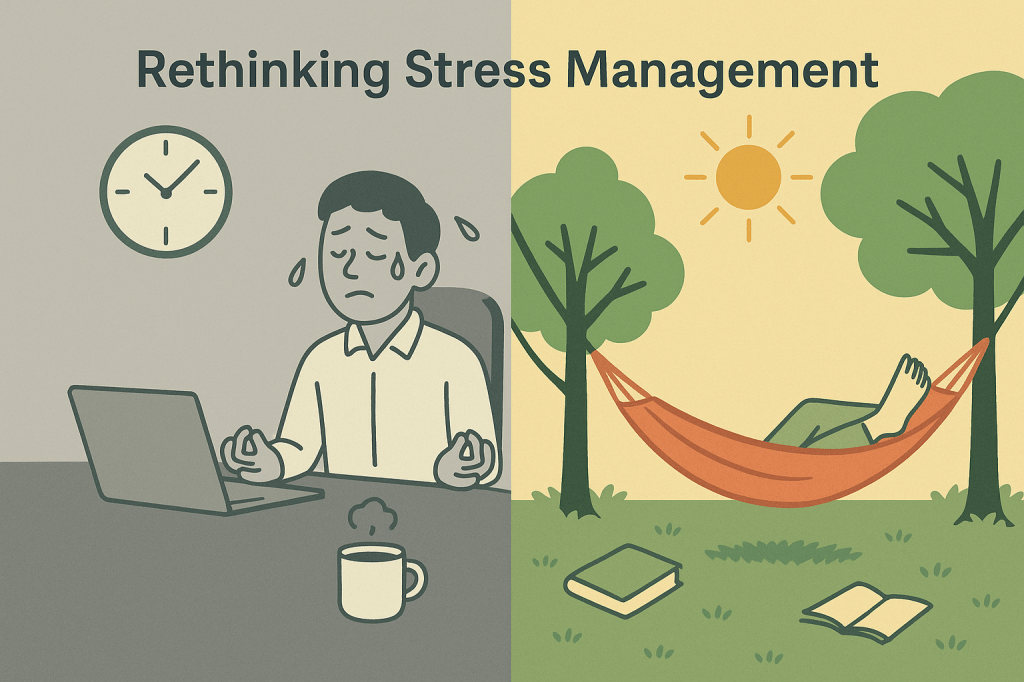
Therefore, adding a few “stress management techniques” can be helpful if they genuinely resonate with you—but they’re not the core solution. What most people need isn’t another task, but a different perspective around boundaries and values. Less overtime, more time on a lawn. More afternoons in a park, slow meals with friends, checking in with your body about what feels good.

But the money!

Despite the prevailing notion that economic development necessitates relentless work hours, the Netherlands exemplifies a more balanced approach. Dutch workers average just 32.2 hours per week—the shortest among OECD (high income democratic) countries—yet the nation maintains a high GDP per capita of $64,572 as of 2023. Furthermore, only 0.3% of Dutch employees work very long hours (50+ per week), the lowest rate in the OECD. This suggests that prioritizing work-life balance doesn’t compromise economic performance. Instead, it fosters a sustainable model where productivity coexists with personal well-being. The Times

Conclusion

I think the average wellness discussion around stress management unfortunately shares the same rotted roots as the problem it claims to address: subtly judging you for not managing to squeeze in a little meditation or yoga on top of an already overwhelming mix of work expectations, family responsibilities, and social obligations. If that kind of advice feels absurd given the scope of the issue—you’re not wrong.

Of course, in real life, we’re already in the thick of it. Financial stressors are real, and the system often feels designed to keep us too exhausted to push back. Still, carving out time for a walk or a bath can help. Yoga is a beautiful practice—so is canoeing, throwing a frisbee, or anything else that brings joy to your heart. These aren’t fixes, but they can be signals—small shifts that begin to bring your life back into alignment with what your heart actually needs.

Both the soul heart that longs for play, and the physical one—where chronic stress quietly takes its toll, and disease remains the number one cause of death in the U.S. It’s time we honor both.

Tips

  • Be kind to yourself.
  • Make space for quiet—and for joy—in each day.
  • Recognize your value beyond what you produce.
  • Set boundaries around work.
  • Prioritize sleep.
  • Take walks in nature.
  • Listen to the signals your body sends—with curiosity, not judgment.
  • Ask for help.
  • And sure, maybe do some yoga.

Lifestyle: The Third Pillar of Health

The Broad Strokes of Lifestyle

Lifestyle encompasses a range of habits and behaviors:

  • Movement: Regular physical activity supports cardiovascular health, maintains muscle mass, and boosts mental well-being.
  • Sunlight and Nature: Exposure to natural light and green spaces can improve mood and regulate circadian rhythms.
  • Substance Use: From alcohol to cannabis to medications, how we engage with substances affects our sleep, hormones, and resilience. Occasional, intentional use may not be a problem—but chronic use often comes at a cost.
  • Stress Management: Managing stress isn’t only about breathwork or meditation—it’s also about how we relate to our thoughts, reframe challenges, and regulate emotions under pressure.
  • Social Connections: Engaging with a community provides emotional support and has been linked to longer life expectancy.

While each of these elements plays a role, let’s delve deeper into a critical cornerstone of lifestyle: movement.


Exercise: The Cornerstone of a Healthy Lifestyle

Shared Benefits: Cardio & Resistance Training

Not all movement is the same, but much of it leads to similar outcomes. Whether you’re lifting weights or going for a run, both resistance and cardiovascular training offer a wide range of overlapping benefits:

  • Improved metabolic health: Both forms of exercise help regulate blood sugar, increase insulin sensitivity, and support healthy body composition.
  • Better mood and mental health: Regular physical activity reduces symptoms of depression and anxiety, improves stress resilience, boosts feel-good brain chemicals like endorphins and dopamine, and helps regulate the nervous system.
  • Cognitive support: Movement increases blood flow to the brain and stimulates the release of brain-derived neurotrophic factor (BDNF), which aids memory, focus, and long-term brain health.
  • Hormonal balance: Exercise can improve testosterone, estrogen, and growth hormone levels, while helping regulate cortisol when practiced consistently and mindfully.
  • Lower inflammation and biological aging: Studies show that both resistance and cardio training reduce markers of chronic inflammation and can even slow biological aging.

But while they share a lot, they also each bring something unique to the table.


Cardiovascular Exercise: Building Endurance from the Inside Out

Cardio exercise is especially valuable for:

  • Heart and circulatory health: Aerobic activity strengthens the heart, lowers blood pressure, and improves overall circulation—helping reduce the risk of cardiovascular disease.
    (CDC)
  • Mitochondrial function and metabolism: Steady-state cardio, especially Zone 2 training, enhances mitochondrial health and supports long-term metabolic efficiency.
    (Peter Attia, MD)
  • Brain health and cognitive protection: Regular cardio is linked to greater hippocampal volume and slower age-related cognitive decline, supporting memory and mental clarity.
    (Harvard Health)
  • Accessibility and adaptability: Activities like walking, swimming, and cycling are low-barrier and easy to sustain. Even short sessions can deliver benefits, and interval training offers similar gains in less time.
    (Harvard Medical School)

Resistance Training: Building Strength for Life

Resistance training is especially valuable for:

  • Muscle and bone health: It preserves lean mass, prevents frailty, and supports bone density—key factors in aging well and maintaining independence.
    (NIH source)
  • Glucose control: While both cardio and strength training help, resistance work is especially effective by increasing muscle mass, which improves how your body stores and uses blood sugar—even at rest.
    (Harvard Health)
  • Posture and injury prevention: Strong muscles support alignment, reduce back pain, and improve movement patterns that protect joints and reduce fall risk.
    (Mayo Clinic)
  • Resilience and longevity: Grip strength and muscle mass are strong predictors of lifespan—arguably more useful than weight or BMI in older adults. Just 90 minutes of resistance training per week has been shown to slow biological aging by up to four years.
    (Prevention.com)

Crafting a Sustainable Exercise Routine

Building a lasting exercise habit doesn’t require drastic measures. Start with manageable goals:

  • Consistency Over Intensity: Regular, moderate workouts are more sustainable and beneficial than sporadic intense sessions.
  • Find Activities You Enjoy: Whether it’s dancing, hiking, or sports, engaging in activities you enjoy will help you stick with the practice.
  • Pair It with Routine Anchors: Linking your workouts to an existing habit—like a walk after work or lifting before your shower—makes the behavior easier to stick with over time.

Bringing It All Together

Whether you’re lifting weights, walking in the woods, dancing in your kitchen, or easing into a gentle swim, the goal isn’t perfection—it’s momentum.

Start where you are. Pick something that feels doable. Keep showing up, and over time, even small choices compound into something strong, steady, and life-giving.

The Core Nutrition Myth

Nutrition is one of those topics that somehow feels both incredibly simple and endlessly complicated. With so much conflicting advice, it’s easy to get lost in the noise. So today, let’s keep it relatively simple and bite off a digestible piece of the nutrition puzzle by tackling one of the biggest myths out there.

Myth: The key to a healthy diet is cutting out an entire macronutrient—fat, carbohydrates, or protein.

The truth is, most bodies do best with a balanced intake of all three macronutrients. The real solution isn’t about elimination—it’s about finding the right quality and balance based on your body’s needs and your lifestyle.


Fats aren’t the villain they were made out to be in the 90s. They’re essential for hormone production, brain health, and absorbing fat-soluble vitamins like A, D, E, and K. There are two things to watch with fats: they’re calorie density, and quality.

Because fats are calorie-dense, moderation is important. Personally, I aim for about 30% of my daily calories from fat, which works out to roughly 50–60 grams. On the quality side, it’s important to know that not all fats support your health equally. The trans fats and highly heated vegetable oils used for things like french fries don’t nourish your body the same way olive oil or coconut oil will.


Carbohydrates play a valuable role in supporting both metabolic health and digestion. Fiber-rich carbohydrates—like vegetables, fruits, and whole grains—help moderate insulin response, support healthy blood sugar levels, and keep your digestive system running smoothly. For active individuals and athletes, carbohydrates provide a readily available source of energy to fuel workouts and aid recovery.

For individuals who are more sedentary and struggling with obesity, reducing highly processed carbohydrates—like sodas, juice, candies, and refined snacks—can be a particularly effective strategy for weight loss. These fast-digesting carbs spike insulin, promote fat storage, and often add a lot of calories without providing lasting satiety. While it’s not about cutting all carbs, focusing on slower-digesting, fiber-rich sources can make a significant difference in controlling hunger, stabilizing energy levels, and encouraging weight loss when needed.


Protein is essential for tissue repair, hormone health, and maintaining muscle mass as we age. The real question is: where should you get your protein? While vegetables and plant foods provide valuable micronutrients, they lack certain critical nutrients that are abundant and highly bioavailable in animal-based foods—specifically vitamin B12, heme iron, and long-chain omega-3 fats.

In the context of weight loss, protein also plays a key role in promoting satiety by influencing the hunger hormones leptin and ghrelin. It’s also uniquely inefficient for the body to convert into usable energy, meaning you can eat more volume while absorbing fewer calories—an advantage when trying to lose weight. On top of that, protein supports muscle growth and maintenance, which helps preserve a higher basal metabolic rate.

With careful planning and supplementation, it’s certainly possible to maintain good health on a fully plant-based diet. But in my view, it’s much easier—and often more sustainable—to support long-term health by including animal-based foods, ideally from free-range and responsibly raised sources for both ethical and nutritional reasons.


In conclusion, there’s a place for each macronutrient in a healthy diet. As cliché as it sounds, lasting health really does come from finding the right balance of whole foods, rather than trying to min-max a single slice of the pie.

Sleep: The First Pillar of Health

It’s impossible to overstate how critical sleep is to our wellbeing across every metric. Quality sleep:

  • Restores dopamine and serotonin, boosting mood and motivation
  • Improves coordination, reaction time, and physical endurance
  • Clears metabolic waste from the brain, supporting long-term cognitive health
  • Releases growth hormone for tissue repair and physical recovery
  • Balances hormones that regulate mood, appetite, and libido
  • Strengthens the immune system and reduces inflammation
  • Helps regulate pain perception via increased activity in the brain’s pain modulation centers

And the list goes on.

Therefore, no matter the issue, I want to check on and support sleep for my patients.


So how do we do that?

Improving sleep starts with what’s often called sleep hygiene—the practical habits and environmental cues that tell your body it’s time to rest. While every person’s situation is different, there are key strategies that benefit almost everyone:

  • Regulate Light Exposure: Morning sunlight helps set your circadian rhythm; bright, especially blue light at night confuses it. Dim the lights in the evening and ideally limit screen time an hour before bed (blue-light blocking apps can help, but reduced exposure is best).
  • Develop a Wind-Down Ritual: Whether it’s reading, meditation, light stretching, or a warm bath, having a consistent pre-sleep routine cues your nervous system to relax. Ideally start this ritual at the same time every day.
  • Improve Your Sleep Environment: Cool, dark, and quiet is the gold standard. Blackout curtains, white noise machines, and keeping the room around 65-68°F can make a big difference.

I’ve struggled with insomnia myself for many years, and alongside the general strategies above, I want to share a few specific corrective measures that have personally helped:

  • Magnesium Support: Magnesium helps relax muscles by competing with calcium at muscle receptor sites, easing physical tension and reducing issues like restless leg syndrome. Epsom salt baths (aka magnesium baths) can offer similar calming effects through the skin.
  • Change Your Sleep Environment: Sometimes the usual bed becomes unconsciously associated with anxiety or the pressure to fall asleep. In these cases, even a less “ideal” environment can work better simply because it feels low-pressure.
  • Try a Firmer Surface: While it sounds counterintuitive, sleeping on a firmer surface can help some people relax more deeply. The additional support reduces the body’s need for subtle muscle engagement, allowing for a greater sense of physical ease.
  • Caffeine Abstinence: While most people find that stopping caffeine at least 12 hours before bed is enough to prevent it from affecting sleep, I noticed that cutting out even my morning coffee led to noticeable improvements.

Often, the moment you mention insomnia, someone will ask, “Have you tried melatonin?”

Personally, I don’t recommend it. While melatonin can be helpful in very specific, short-term scenarios (like adjusting to jet lag), regular use may reduce your body’s natural melatonin production over time. Many people also report side effects like vivid or unsettling dreams.

In my professional opinion, melatonin belongs in the same category as other pharmaceutical sleep aids: potentially useful in acute cases, but not ideal for long-term use. These substances can create dependency, and even if they “help you fall asleep,” the quality of that sleep is often compromised—which is why people still feel groggy or unrefreshed after using them.

As always, if anyone reading would like to talk about improving your sleep quality, I’m happy to help. Just text me to get started: 919-809-9355.