Why Exercise Isn’t the Main Key to Weight Loss

I’ve had a few patients recently tell me they don’t know why they can’t lose weight, even though they’ve been fairly active for a long time.

To me, this is a straightforward question. But it often surprises people because we’ve spent years swimming in mixed messages about weight loss. One of the persistent misunderstandings in the current zeitgeist is that the right kind of exercise is the key.

It isn’t.

Yes, the old calories in, calories out idea is broadly true, but some under-the-hood factors matter more over the long run.


The Real Drivers: Hunger, Stress, and Sleep

The essential problem with using exercise as a weight-loss tool is that our bodies naturally increase hunger signals in proportion to activity level. More exercise → more hunger → more eating.

On top of that, stress and sleep issues can push people to eat for comfort outside of true hunger signals and can disrupt our basal metabolic rate — the bulk of our everyday calorie burn, just to keep us alive.

Since BMR makes up most of our “calories out,” the real key shifts to intake and satiety. In other words:

How do we get full, and how do we stay full?


What Actually Increases Satiety

Protein, fiber, and water — in that order — do the heavy lifting for satiety.

This is why both major “diet camps” end up being partially right. Keeping fat intake somewhere around what’s needed for hormone synthesis (roughly 20–30% of total calories) is ideal. Carbohydrates can be kept relatively low, as long as you have enough for energy and daily functioning.

Unsurprisingly, properly built salads and soups can work well because they activate stretch-receptor satiety signals. But that’s not the only option anymore. There are now high-fiber, resistant-starch breads, bagels, and even rice prep methods that make fullness and blood-sugar stability easier than ever.

Protein remains the keystone, though. It directly triggers the big satiety hormones, leptin and ghrelin. Ideally, each meal should have a solid source of protein; snacking on chips alone just won’t trigger fullness in the same way.


So… Is Exercise Useless?

No — exercise is fantastic for almost everything except weight loss. It helps a little, but the bulk of the challenge is increasing awareness around intake, hunger cues, and general wellness.


Practical Tools That Actually Help

Track Your Intake (Even Briefly)

Apps like MyFitnessPal can give you a more objective sense of your true calorie intake. Many people do well through the week but “let loose” on one or two days. If you keep tracking on those days, you’ll often see how the weekly average ends up far higher than your “good day” calories — and that’s enough to stall progress.

We are very good at taking in a large number of calories at once, so consistency really does matter.

Know Your Numbers

If you’re curious about specifics, look up a TDEE (Total Daily Energy Expenditure) calculator online. Let’s say it gives you 2500 calories/day. Eating about 500 calories below that each day should yield roughly one pound of fat loss per week, assuming everything else is stable.

Just remember: water weight moves much faster than fat. Don’t let normal day-to-day scale fluctuations derail you. Trust the intake tracking, use measurements, or average your weight over a week or month to get a clearer view.

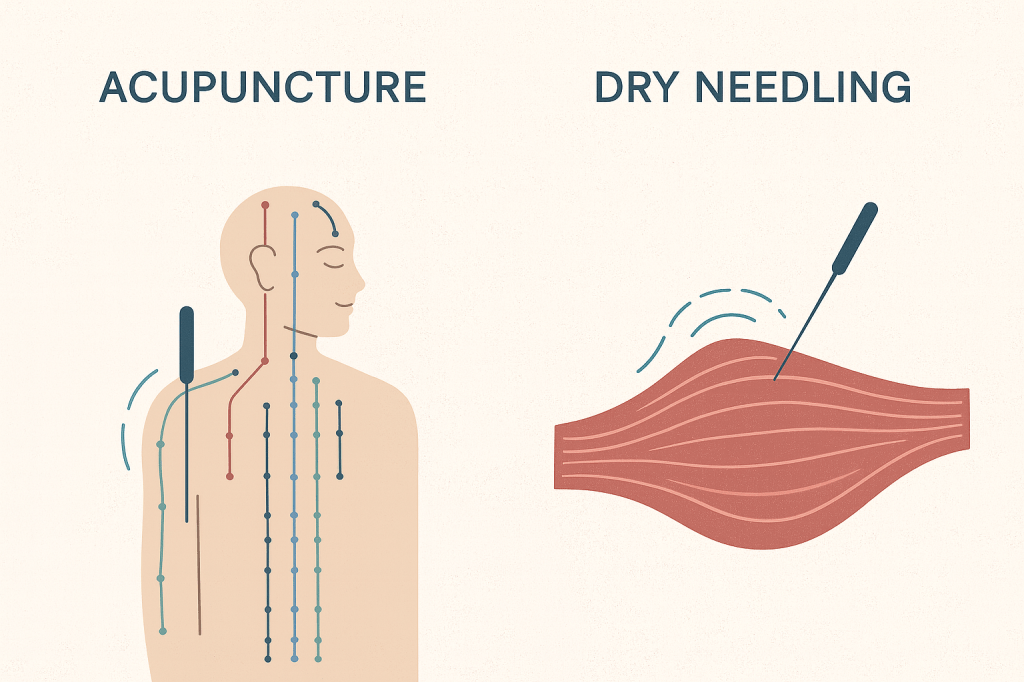
Dry Needling

Probably one of the most common questions I get asked is: What do you think of dry needling? Or do you provide dry needling?

It’s a complicated thing to answer because I think there are two valid ways to see it.

The Legal & Scope-of-Practice Angle

As of writing, dry needling is illegal in California, Hawaii, New York, Oregon, and Washington. The essential issue is this: I don’t take a weekend course in chiropractic adjustments and call myself a “dry chiropractor” or “holistic joint manipulator” or something of the sort.

The primary argument against dry needling, as I understand it, is that the requirements for training aren’t stringent enough to ensure safe and effective treatment. Acupuncture licensure includes extensive training for years to make sure we can insert needles into people in ways that are consistently safe and beneficial.

There’s also the financial reality: it’s an encroachment on scope of practice that acupuncturists mostly deal with because they’re under-represented in a lobbying sense in most states.

But That’s Not the Whole Story

All that said, I don’t think the legal debate tells the full truth. I believe it is possible for a physical therapist or chiropractor to put in the time and effort to genuinely perform dry needling in a way that is safe and helpful.

In my clinical opinion, there is something beneficial about specifically targeting muscle tension through trigger points or neuromuscular junctions—without necessarily needing to interpret the more subtle energetic connections that traditional acupuncture focuses on.

Some acupuncturists even take dry needling classes for this reason: to supplement their traditional training with a more Western, physiology-based approach to the body, especially around trigger points and fascial connections. Traditional acupuncture is deeply enmeshed in Chinese herbal theory and an extremely detailed mapping of the energetic body. It’s rich—but it can also be overwhelming when sometimes you just want to get a spasmed muscle to relax.

Do I Do Dry Needling?

When people ask if I do dry needling, I say yes. I’m more than capable of palpating trigger points and treating them. I mainly let people know that I use a more subtle, gentle technique than most dry needlers. I say this based on both my own experience receiving dry needling and the experiences patients share with me.

Dry needling techniques can often be overly aggressive and, at times, can feel re-traumatizing rather than creating a consistently positive healing experience.

My Main Gripe: The “No Pain, No Gain” Mindset

Assuming someone doing dry needling is being safe about it, my real issue is that the intensity of the technique sometimes scares people away from acupuncture altogether. I’ve had many patients tell me they were afraid to try acupuncture because of a previous dry needling experience.

So then I have to educate: while acupuncture can come with some sensation, the intensity is much lower, and many patients feel little to nothing during an effective treatment. It is possible to resolve pain without causing pain.

Where I Land

So that’s my opinion overall. If I had to pick a side, I prefer a generous approach. I’d love to share this practice, and ideally more people would have access to safe, effective treatments to reduce pain.

I’d prefer more training and a shift in perspective—one that considers the nervous system as much as the tissue—so as to avoid treatments that feel like re-injury. But if pressed, I wouldn’t reduce access to acupuncture or to its relatively new Western spin-off: dry needling.

My experience with rotator cuff exercises

Back in 2019 did an oopsie. I was at a party and saw someone teaching the human flag pole exercise/party trick and I wanted to give it a go. I kept bending my elbow which is apparently a big no-no and I caused a strain in the front of my right shoulder.

Since then I’ve had minor pain on and off, and relative weakness in my right (dominant) shoulder compared to my left. Particularly with overhead movements my right shoulder is more stiff and gives out quicker. That is unless I do some PT exercises before I work out.

I’ve noticed that when I’m consistent in doing a proper rotator cuff warmup I don’t get pain, and my strength is more similar between my left and my right. This warm up always starts with a little mobility work, essentially stretching. And is followed by the real key for me which is stability work: slow controlled external rotation of the shoulder in different positions.

Working the small stabilizer muscles in external rotation helps to support my shoulder in its proper position, and re-educate my body to keep proper shoulder joint positioning throughout my workouts. Generally the urge will be to turn too much internally and pinch upward, causing pressure on the supraspinatus or bicep tendon. The exercises prime the stabilizers around the shoulder to properly activate and hold the shoulder in proper positioning.

The most interesting bit to me, and the reason I’m writing all of this, is just my personal experience about the good and bad news of these exercises. For me, there isn’t a point in which I’ve fully “fixed it”. While I don’t have unprovoked pain away from lifting, if I try to use my right shoulder without warming up with these exercises, the pain always comes back.

I’ve tried a few times now working out without these exercises, and the pain always comes back, even 6 years after the incident, and about a year of regular rotator cuff work.

So, bad news is, it isn’t a fix. If I stop my exercises the pain will return. But the great news is, I can manage my shoulder issues on my own with just about 5-10 minutes work before I plan to lift anything heavy with my shoulders. That works for me.

For more details about some of the stuff I do, check out my favorite PT’s article on shoulder stability: https://squatuniversity.com/2018/10/06/stabilizing-the-shoulder-blade-joint/

How does acupuncture work?

For a long time, I had trouble answering this question in my practice—not because I didn’t know, but because there are so many details and effects that it was hard to know where to start.

These days, I tend to compare acupuncture to exercise: I’ll say, “The ‘magic’ lies in how the body responds to a kind of good stress.” And then I’ll share a short sampler of some of the information below.

Everything that follows is from a Western physiological perspective—it doesn’t get into the traditional framework of moving Qi or energy through the body. When someone’s interested in that more energetic lens, I’m happy to talk about promoting flow and balance in as much or as little detail as they’d like. But for those who prefer a scientific explanation, here’s your answer:


Acupuncture’s mechanisms of action are multifaceted, involving both physiological and neurological pathways. While the full picture is still being refined, research across neurobiology, endocrinology, and immunology has identified several overlapping mechanisms that explain how acupuncture can produce analgesic, anti-inflammatory, and regulatory effects.

Here’s a clear breakdown of the major mechanisms of action:


🧠 1. Neurotransmitter and Neuromodulator Release

Acupuncture stimulates peripheral sensory nerves (especially Aδ and C fibers), leading to activation of the spinal cord and brain regions that modulate pain and emotion. This results in the release of several key neurochemicals:

  • Endorphins, enkephalins, dynorphins: endogenous opioids that reduce pain perception.
  • Serotonin and norepinephrine: involved in mood regulation and descending pain inhibition.
  • GABA and glutamate modulation: balancing excitatory/inhibitory signals in the nervous system.
  • Adenosine: increases locally, providing anti-inflammatory and analgesic effects.

🧩 Result: Reduced pain, relaxation, and modulation of mood and stress.


⚡ 2. Activation of the Gate Control Mechanism (Spinal Level)

Acupuncture can influence pain signaling at the spinal cord level:

  • Stimulated Aβ fibers inhibit pain transmission from C fibers (the “gate control theory”).
  • This dampens nociceptive (pain) signals before they reach higher brain centers.

🧩 Result: Decreased pain transmission and heightened threshold for pain perception.


🧬 3. Modulation of the Autonomic Nervous System (ANS)

Acupuncture appears to rebalance sympathetic and parasympathetic activity:

  • Reduces sympathetic overactivity (which is linked to stress, hypertension, and inflammation).
  • Enhances parasympathetic tone, promoting rest, digestion, and recovery.

🧩 Result: Lower heart rate and blood pressure, improved digestion, and stress reduction.


🔥 4. Anti-inflammatory and Immune Regulation

Acupuncture modulates immune cell activity and cytokine production:

  • Decreases pro-inflammatory cytokines like IL-1β, IL-6, TNF-α.
  • Increases anti-inflammatory mediators like IL-10.
  • Stimulates the hypothalamic-pituitary-adrenal (HPA) axis, influencing cortisol release and immune modulation.

🧩 Result: Reduced inflammation, improved healing, and immune balance.


🩸 5. Improved Local Circulation and Tissue Healing

Needle insertion causes a mild microtrauma that:

  • Increases local blood flow and oxygenation.
  • Enhances removal of metabolic waste products.
  • Promotes release of growth factors and nitric oxide.

🧩 Result: Faster tissue repair, muscle relaxation, and pain relief.


🧘 6. Central Nervous System Integration

Functional MRI studies show acupuncture activates or deactivates specific brain regions:

  • Activated: hypothalamus, periaqueductal gray, anterior cingulate cortex.
  • Deactivated: limbic structures involved in fear and pain perception (like the amygdala).

🧩 Result: Central modulation of pain, emotion, and homeostatic regulation.


🪶 7. Placebo and Expectation Effects

Although not the whole story, expectation and context play a measurable role:

  • Belief and relaxation during acupuncture can engage prefrontal and limbic systems.
  • These in turn activate real biochemical and autonomic responses.

🧩 Result: Enhanced therapeutic outcome through psychobiological synergy.


🧩 Summary Table

MechanismPrimary PathwayKey Effects
Neurochemical releaseCNS + spinalAnalgesia, relaxation
Gate control theorySpinalInhibits pain transmission
Autonomic modulationANSReduces stress, balances organs
Immune regulationCytokines, HPA axisAnti-inflammatory
Local effectsMicrocirculationTissue repair, pain relief
CNS network effectsBrain regionsPain and emotional regulation
Placebo/expectancyPsychobiologicalAmplified healing response

Where to Start in Healing: Naturopathic Therapeutic Order

Today’s blog post is a little deep dive into my thought process as influenced by my Naturopathic Doctorate. While there’s a place and a purpose for every part of the pyramid, ideally in non-emergency conditions, the foundational aspects of health are addressed first and indefinitely.

While there’s different wording in my infographic vs chart below, essentially that baseline level is ideally removing whatever obstacle is interfering with the body naturally healing itself. This could be stress, insomnia, or continuing to do intense yard work when your forearms are very adamantly and persistently telling you to take a break (not to call you out Mom).

For many people, there’s things we keep repeatedly being exposed to that keep the dis-ease, pain, suffering, tension, etc. coming back. We might be ignoring our body’s signals to move differently, perhaps ignoring our hearts’ signals to change how we’re working/living, letting our emotions overly affect our diet, and whatever else we’re more attached to than feeling good in our bodymind. This is the best place to focus our efforts for lasting healing.

Certainly more targeted interventions can be necessary, and helpful for starting down a new path, but if the foundational needs for safety and rest aren’t being addressed, problems will keep cropping up no matter how many times we use targeted interventions to keep them at bay.

Feel free to read a bit more below regarding the tiers of intervention and a few notes about how doctors might use this information in practice.

LevelFocus / GoalTypical Interventions or Strategies
1. Remove Obstacles to Health (Remove Obstacles to Cure)Identify and eliminate factors that impair the body’s ability to healDiet & lifestyle changes, reducing toxic exposures, improving sleep, stress reduction, removing emotional/psychological barriers, correcting digestion, eliminating unhelpful habits 2
2. Stimulate the Healing Process (Vis Medicatrix Naturae)Support and prime the body’s innate self-healing forcesGentle therapies: hydrotherapy, nutrition, mild botanical remedies, exposure to nature, energetic modalities, light exercise 3
3. Strengthen Weakened SystemsBuild resilience and capacity in physiological systemsNutritional support, adaptogens, detoxification, supporting liver, immune system, hormonal regulation, antioxidants, lifestyle & restoration measures 4
4. Correct Structural IntegrityRestore proper alignment, mechanical function, and circulationPhysical medicine: chiropractic, osteopathy, massage, postural correction, ergonomics, movement therapies 5
5. Use Natural, Targeted TherapiesWhen necessary, apply more specific natural agents to address pathologyHerbal medicine, specific nutraceuticals, botanicals, other therapies selected for a given condition 6
6. Use Pharmacologic or Synthetic AgentsIn cases where gentler methods are insufficient, use stronger toolsPharmaceuticals, medications, more potent interventions (where within scope/licensing) 7
7. Use Invasive / Surgical / Life-Saving InterventionsThe most forceful or invasive options, when essentialSurgery, radiation, hospitalization, advanced medical interventions, when no less invasive option suffices 8

Notes & caveats

  • The order is not rigid. A patient’s condition may require “jumping” to a higher level sooner (for instance, in emergencies) or combining levels concurrently. 9
  • The principle behind this is to use the least force necessary to achieve healing, minimizing potential harm or side effects. AANMC 10
  • The first step—removing obstacles—is foundational: without clearing the blockages (diet, toxins, stress, structural impediments, etc.), further therapies may be less effective. 11
  • In practice, a naturopath may blend different steps: e.g. they might remove obstacles, stimulate healing, and support weakened systems in parallel, then escalate if needed.

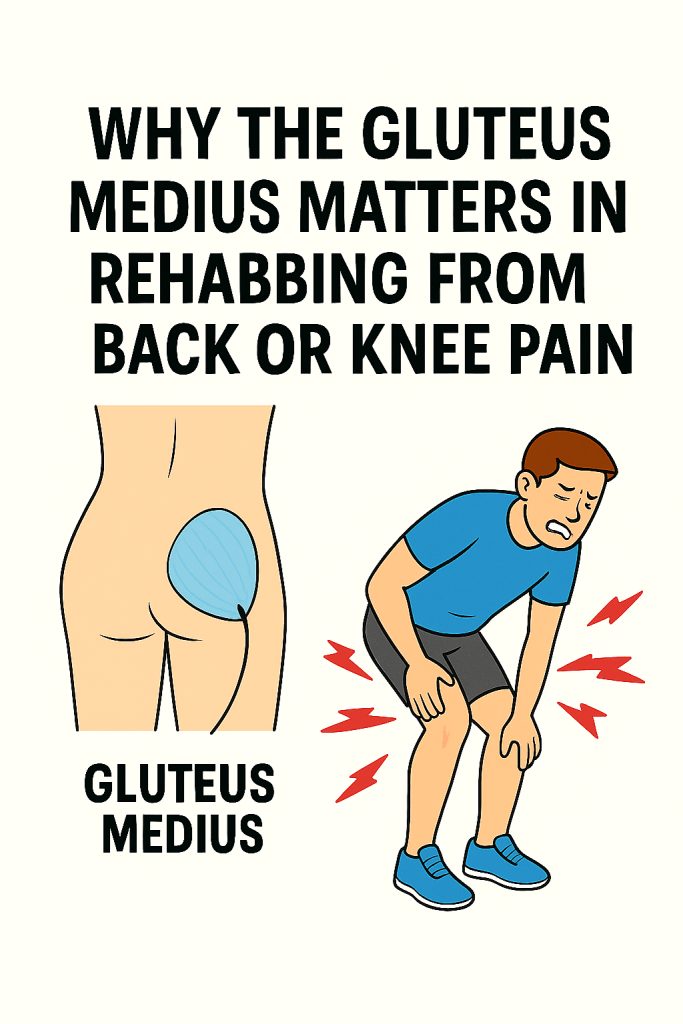
Why the Gluteus Medius Matters in Rehabbing From Back or Knee Pain

Knee pain and low back pain often trace back to the same culprit: poor gluteus medius function. When this muscle isn’t firing well, the knee can collapse inward (valgus), stressing the joint and contributing to patellofemoral pain. At the same time, an underactive glute medius fails to stabilize the pelvis, forcing the lower back and surrounding muscles to take on extra work—often aggravating pain instead of easing it.

That’s why the gluteus medius is such a key player in both injury rehab and long-term resilience. Let’s look at what it actually does, and which exercises best restore its strength and stability.


🔑 Key Functions

Hip Stabilization (especially when standing on one leg)
The gluteus medius helps keep your pelvis level when you walk, run, or stand on one leg.
Without it, your pelvis would “drop” on the unsupported side—a condition called Trendelenburg gait.

Lateral Stability & Balance
It acts like a side anchor, keeping your hips, knees, and ankles in good alignment.
This protects against wobbly knees, ankle rolling, and inefficient force transfer when moving.

Hip Abduction
Moving your leg out to the side (like in side steps or kicking outward) is primarily the job of the glute med.
It also helps rotate the hip outward and inward depending on leg position.

Joint Health & Injury Prevention
A weak glute med often shows up as knee pain, IT band issues, or hip discomfort.
Runners, lifters, and athletes especially rely on it to prevent overloading other muscles and joints.

Athletic Power & Efficiency
Strong glute medius = better agility, cutting, lateral shuffling, sprint mechanics, and force transfer.
It’s a hidden powerhouse for acceleration and deceleration.

👉 In short: the gluteus medius keeps you upright, balanced, and protected, whether you’re just walking down the street or cutting hard on the basketball court. It’s a stabilizer first, mover second—and that’s what makes it so essential.


🏋️ Exercises to Strengthen Your Glute Medius

Here are three of the most effective exercises to strengthen your gluteus medius. They’re simple, but if you load or sequence them right, they hit hard:


1. Side Plank with Hip Abduction (Hold Variation)

How: Start in a side plank on your elbow. Lift the top leg just a few inches and hold it there for 5–10 seconds before lowering.

Tips:

  • Keep hips stacked and core engaged so you don’t rotate forward or backward.
  • Focus on stability, not just swinging the leg.

Why: Builds glute med strength while training it in its stabilizing role, which carries over more directly to real-life movement.

Note: Variations like clamshells with a band or banded side planks are also great for learning to activate and stabilize the glute med.


2. Banded Lateral Walks (a.k.a. Monster Walks / Side Steps)

How: Place a resistance band around your thighs (just above knees or ankles). Get into an athletic quarter-squat and take wide steps sideways.

Tips:

  • Keep constant tension on the band (don’t let your feet snap together).
  • Stay low to keep glutes engaged.

Why: Teaches hip stability and strengthens glute med under load—fantastic for runners and athletes.


3. Single-Leg Glute Bridge / Hip Thrust

How: Lie on your back, one foot planted, the other lifted. Drive through your planted heel to lift hips off the ground.

Tips:

  • Actively keep hips level (don’t let one side sag).
  • Squeeze glutes at the top, control on the way down.

Why: Forces the glute med to stabilize pelvis while the glute max drives extension—mimics real-life one-leg stance mechanics.

Note: For those working with a coach or therapist, more advanced drills like the DNS star can build even deeper coordination, but most people will benefit from starting with these simpler exercises first.


Bonus progression: Once you’ve mastered these, add Bulgarian split squats or single-leg Romanian deadlifts. They hit the glute med hard as a stabilizer in functional patterns.


✅ Conclusion

Strong gluteus medius muscles don’t just build athletic power — they protect your joints, improve balance, and keep everyday movement smooth and pain-free. Whether you’re rehabbing from low back or knee pain, training for sport, or just looking to feel stronger on your feet, a little focused glute med work goes a long way.

The Perception of Safety: Polyvagal Theory, Trauma, and Healing

Polyvagal Theory

Polyvagal Theory is a framework developed by Dr. Stephen Porges that explains how our autonomic nervous system (ANS) responds to stress, safety, and social connection. It builds on the traditional “fight-or-flight” understanding of the nervous system, but adds a more nuanced view of how our bodies regulate states of arousal and safety.


Core Idea

The ANS isn’t just binary (on/off, stressed/relaxed). Instead, it has three main pathways, each linked to the vagus nerve (hence poly–many, vagal–vagus nerve):

1. Ventral Vagal System (Social Engagement State):

  • Activated when we feel safe.
  • Supports calm, connected, socially engaged behavior.
  • Regulates facial expressions, vocal tone, listening, and emotional attunement.
  • This is the “rest and connect” mode.

2. Sympathetic Nervous System (Mobilization / Fight-or-Flight):

  • Activated when we sense danger or threat.
  • Increases heart rate, adrenaline, and readiness for action.
  • Useful for escaping or defending against threats.
  • This is the “action under stress” mode.

3. Dorsal Vagal System (Shutdown / Immobilization):

  • Activated under extreme threat or when escape isn’t possible.
  • Can lead to collapse, freeze, dissociation, numbness, or withdrawal.
  • This is the “shutdown” or “conservation” mode.

The Hierarchy

  • The nervous system typically tries ventral vagal first (social connection and safety).
  • If safety cues fail, it shifts into sympathetic fight-or-flight.
  • If that doesn’t resolve the threat, it can default into dorsal vagal shutdown.

This hierarchy helps explain why people under stress might become hyper-reactive, avoidant, or even “numb out.”


Neuroception

Porges introduced the concept of neuroception — our nervous system’s unconscious scanning for cues of safety, danger, or life-threat. It happens below awareness, shaping our state before we even consciously interpret the situation.


Applications

  • Trauma Therapy: Helps explain why trauma survivors may freeze, dissociate, or struggle with connection.
  • Clinical Practices: Therapists use polyvagal-informed techniques (breathwork, safe touch, prosody in voice, co-regulation) to help clients move back toward ventral vagal states.
  • Everyday Life: It helps us understand patterns like why stress makes us withdraw, why social connection soothes us, and why safety is essential for healing.

The Effects of Trauma

Trauma can condition the nervous system to prioritize survival responses over connection, changing which vagal pathway gets activated and how easily someone can return to ventral vagal safety. Here’s how it often shows up:


A. Ventral Vagal (Safety & Social Engagement)

  • Without Trauma: People can fluidly return here after stress. They feel safe enough to connect, self-soothe, and co-regulate with others.
  • With Trauma: The ventral vagal “baseline” often weakens. Safety cues may not register as safe—eye contact, gentle touch, or even quiet moments might feel threatening. People may mistrust closeness or stay guarded, making it harder to feel grounded in calm connection.

B. Sympathetic (Mobilization: Fight or Flight)

  • Without Trauma: Stress triggers short bursts of fight-or-flight, then the body resets once the danger passes.
  • With Trauma: The system can become hypersensitive. Everyday challenges feel like threats, leading to chronic anxiety, hypervigilance, irritability, or restlessness. The nervous system “jumps” into sympathetic activation and may struggle to downshift.

C. Dorsal Vagal (Shutdown, Freeze, Dissociation)

  • Without Trauma: This only kicks in under overwhelming threat (like fainting, collapsing, or “playing dead” in nature).
  • With Trauma: The dorsal pathway can become more easily activated. People may dissociate, feel numb, “check out,” or struggle with energy and motivation—even in situations that aren’t life-threatening. This is especially common with chronic trauma or when fight/flight felt impossible or unsafe.

Trauma’s Lasting Imprint

  • Rigidity of Response: Trauma makes the nervous system less flexible—people can get “stuck” in sympathetic arousal or dorsal shutdown rather than cycling smoothly back to ventral vagal calm.
  • Distorted Neuroception: The unconscious scanning system becomes biased toward perceiving threat. Even neutral or safe situations can feel unsafe.
  • Fragmented Regulation: Someone might swing between hyperarousal (sympathetic) and hypoarousal (dorsal) without ever settling into ventral vagal connection.

Healing Implications

  • Restoring access to the ventral vagal state is central to trauma recovery.
  • Practices like safe social connection, attuned therapy, breathwork, grounding, gentle movement, and co-regulation with trusted others help re-train the nervous system to recognize safety and reestablish flexibility across all states.
  • On a daily level, even small routines—a consistent safe space, regular grounding practices, and reliable rhythms—can serve as anchors that remind the body it can return to safety.

Healing is a gradual process that asks for patience, repetition, and courage—but with consistent care, our nervous system can learn to trust safety again and the world itself can begin to feel less threatening, more genuinely safe.

Generated image

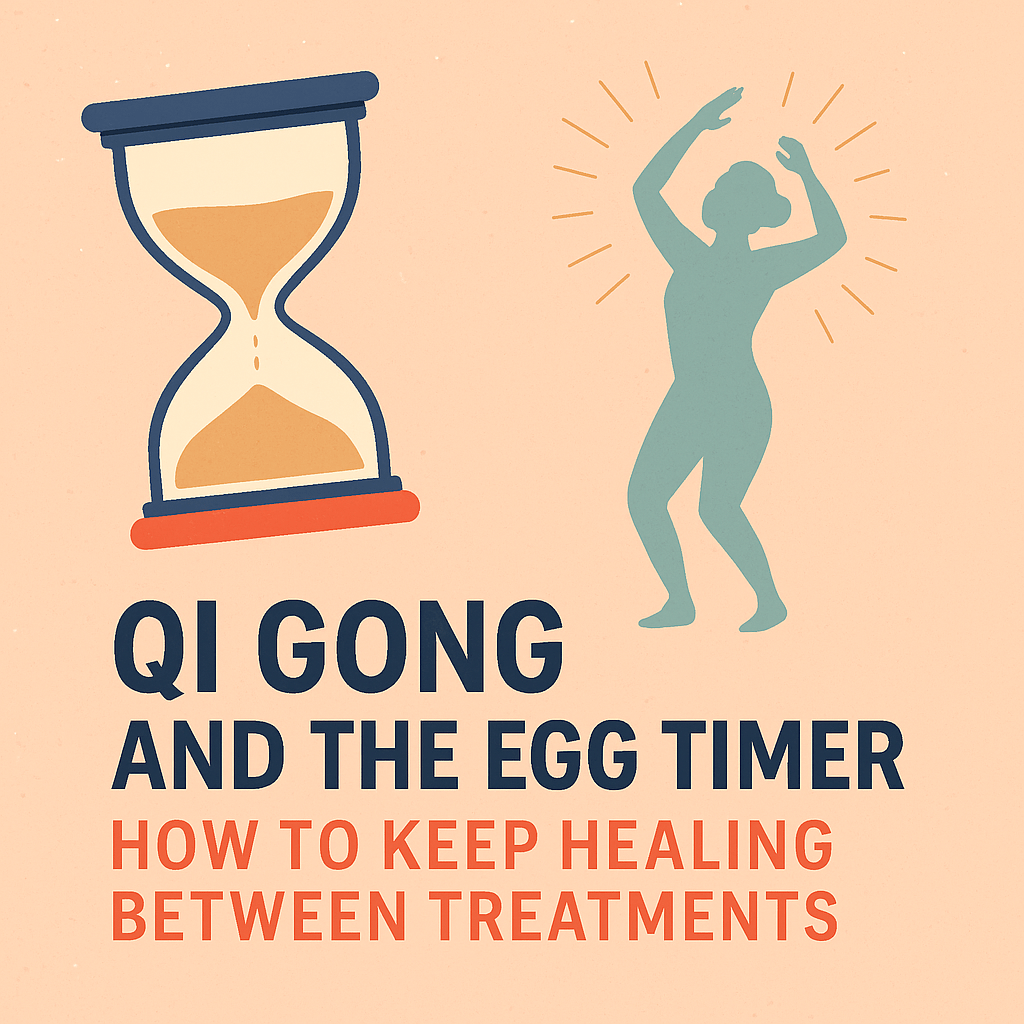
Qi Gong and the Egg Timer: How to Keep Healing Between Treatments

“As long as you are awake, you can be mindful.
All it takes is wanting to and remembering
to bring your attention into the present moment.”

— Jon Kabat-Zinn


So you’re getting regular bodywork… but the aches keep coming back?

The problem isn’t you. The problem is the economy. More specifically: hours hunched over a desk, eyes locked on a screen, posture slowly folding in on itself.

Even with good treatments, your body is up against a daily tide of stress, static positions and repetitive movement. Both our body and our mind calcify into the same painful patterns unless we consistently make intentional efforts to shift them.


Enter: the hourly reset

I often suggest patients set a simple alarm every hour. When it goes off, it’s your cue to:

  • Best: Get up, walk around, shake it out.
  • Good: Take 1–3 deep, conscious breaths before diving back in.
  • At least: Notice your body. Are your shoulders creeping up toward your ears? How’s your neck doing?

Qi Gong shaking (a favorite)

Qi Gong has a simple, joyful reset:

  1. Rise up on your toes.
  2. Drop down and let your whole body shake.
  3. Add sound if you want—hum, sigh, or let out whatever noise you want!

It’s about moving energy, loosening tension, and resetting your nervous system.

Alternatively, just put on a song and dance it out.


Why it matters

Your body and nervous system both need regular resets, especially if you’re doing stressful or intense work. These micro-pauses are huge for shifting the pattern of stress solidifying into recalcitrant habits of tension. Without body mindfulness and consistent movement, even the best therapeutic treatment is just a temporary fix.


Conclusion

If you’re investing in regular treatments but not feeling lasting progress, don’t give up. Try adding micro-resets: mindful movement, a shake, or even just one intentional breath each hour.

Because mindfulness is magic and movement is medicine.

Hip Airplane: Stop Letting Your Back Do Your Hips’ Job

What It Is

  • Category: Dynamic stability + active mobility drill
  • Focus: Strengthens glute medius/max, deep hip rotators, and core while actively improving hip internal/external rotation range.
  • Why It Works: You’re balancing on one leg, hinging forward at the hips, and then rotating your pelvis open/closed—forcing the stabilizers to work while moving through controlled ranges.

Why It’s Great for Stability + Mobility

  • Stability: Trains the glute medius to hold the pelvis level while dynamic movement happens above.
  • Mobility: Opens and closes the hip capsule actively, increasing usable rotation range (critical for deep squats, lunges, kicking, and acro).
  • Balance: Challenges proprioception
  • Core–hip connection: Forces the obliques, core and back muscles to stabilize the spine while the pelvis rotates.

How to Do Hip Airplanes

1️⃣ Setup

  • Stand tall on one leg (soft bend in knee).
  • Hinge forward from the hips into a single-leg RDL position — back leg extended behind you, torso roughly parallel to the ground.
  • Arms can go out like airplane wings for balance, or hands on hips to feel your pelvic rotation.

2️⃣ Movement

  • Open: Slowly rotate your chest and pelvis outward, so your hips are “stacked” (standing leg hip moving into external rotation).
  • Close: Rotate your chest and pelvis inward, so your hips are “square” or even slightly past square (standing leg hip moving into internal rotation).
  • Keep the knee of your standing leg pointing forward—don’t let it drift side to side.
  • Move with control, pausing briefly in each position.

3️⃣ Reps & Tempo

  • 3–5 reps per side, each rep being open → closed → back to open = 1
  • Slow and controlled: ~3–5 seconds each way

Key Cues

  • Hinge, don’t twist the spine → all the rotation happens at the hip socket.
  • Standing leg stays strong → slight bend, knee over mid-foot.
  • Foot tripod → big toe, little toe, and heel stay grounded.
  • Think of “rotating your belly button” rather than swinging the leg.

Link to Back and Hip Pain

Back pain

  • Limited hip rotation or poor pelvic stability forces the lumbar spine to rotate more than it should, creating micro-twists with every step or bend.
  • Hip airplanes build rotational strength and mobility at the hip, reducing the need for your low back to compensate.

Hip pain

  • Weak glute medius/max can shift excess load onto the hip flexors, adductors, or deep rotators, leading to overuse and irritation.
  • Controlled rotation in hip airplanes improves joint alignment and muscular balance, which can reduce discomfort—especially in mild impingement cases (avoid during acute flare-ups).

Rethinking Back Pain: The Role of Fascia

Today I want to talk about something I’ve seen as a primary source of pain in countless patients—yet it’s rarely mentioned in medical school or by most doctors. While I’m still exploring the best ways to keep fascia healthy over the long term—through stabilizing exercises, muscle balancing, and movement practices—I’ve consistently found that massage, cupping, and acupuncture can bring meaningful relief.

For now, let’s start with the basics: what fascia is, and more specifically, the type I most often hear patients describe as the exact spot of their pain—the thoracolumbar fascia.


What Is Fascia?

Fascia is a type of connective tissue in your body—it’s kind of like a full-body spiderweb made of collagen that surrounds and supports everything: muscles, bones, nerves, blood vessels, and organs. It’s not just passive packing material—it’s dynamic, sensitive, and deeply involved in how your body moves and feels.

🧠 Key Facts

  • Structure: Tough but flexible, fascia is made mostly of collagen fibers arranged in a multidirectional web.
  • Function: It holds things in place, transmits force, reduces friction, and allows structures to slide smoothly over each other.
  • Layers:
    • Superficial fascia: just beneath the skin, often containing fat.
    • Deep fascia: wraps around muscles and bones.
    • Visceral fascia: encases internal organs.

Fascia can get tight, stuck, or inflamed, contributing to pain and mobility restrictions—even far from the original source. It’s richly innervated, meaning it plays a major role in proprioception and pain perception. Manual therapies (like massage, myofascial release, or acupuncture) often aim to restore its glide and elasticity.


🧱 Thoracolumbar Fascia (TLF)

The thoracolumbar fascia (TLF) is a major fascial structure in your lower back—like a thick, multilayered tension bridge connecting your upper and lower body. It’s central to stability, movement, and force transmission, especially through your core and spine.

📍 Location

The TLF spans from the thoracic spine to the sacrum, stretching laterally to the ribs and hips, and includes three layers:

  • Posterior layer: Just under the skin and superficial muscles like the latissimus dorsi.
  • Middle layer: Between the deep back muscles (e.g., multifidus) and quadratus lumborum.
  • Anterior layer: Deepest, lying in front of quadratus lumborum and connecting to the psoas.

🏋️‍♂️ Function and Importance

  1. Core Stability:
    Acts like a natural weightlifting belt by anchoring key muscles:
    • Latissimus dorsi
    • Gluteus maximus
    • Transversus abdominis
    • Internal obliques
      These muscles create tension through the fascia to stabilize the spine.
  2. Force Transmission:
    Transfers power between upper and lower body—especially important in walking, running, lifting, and rotation.
  3. Back Pain:
    Adhesions or tension in the TLF can reduce mobility and contribute to chronic or mechanical low back pain.
  4. Sensory Function:
    Fascia is packed with sensory nerves. Dysfunction here doesn’t just feel tight—it can generate real pain and disrupt body awareness.

🔧 Clinical Implications

  • Manual therapies (massage, cupping, acupuncture) can reduce tension and improve glide between fascial layers.
  • Engaging muscles like the transversus abdominis through exercises (planks, dead bugs, etc.) strengthens the fascial tensioning system.
  • Dysfunction in the glutes, lats, or obliques can create asymmetrical pulls, affecting spinal mechanics via the TLF.

🧩 Summary

The thoracolumbar fascia acts as a central tension system for the torso, tying together posture, movement, stability, and sensation. If something’s off in your core, hips, or back, chances are the TLF is part of the story.