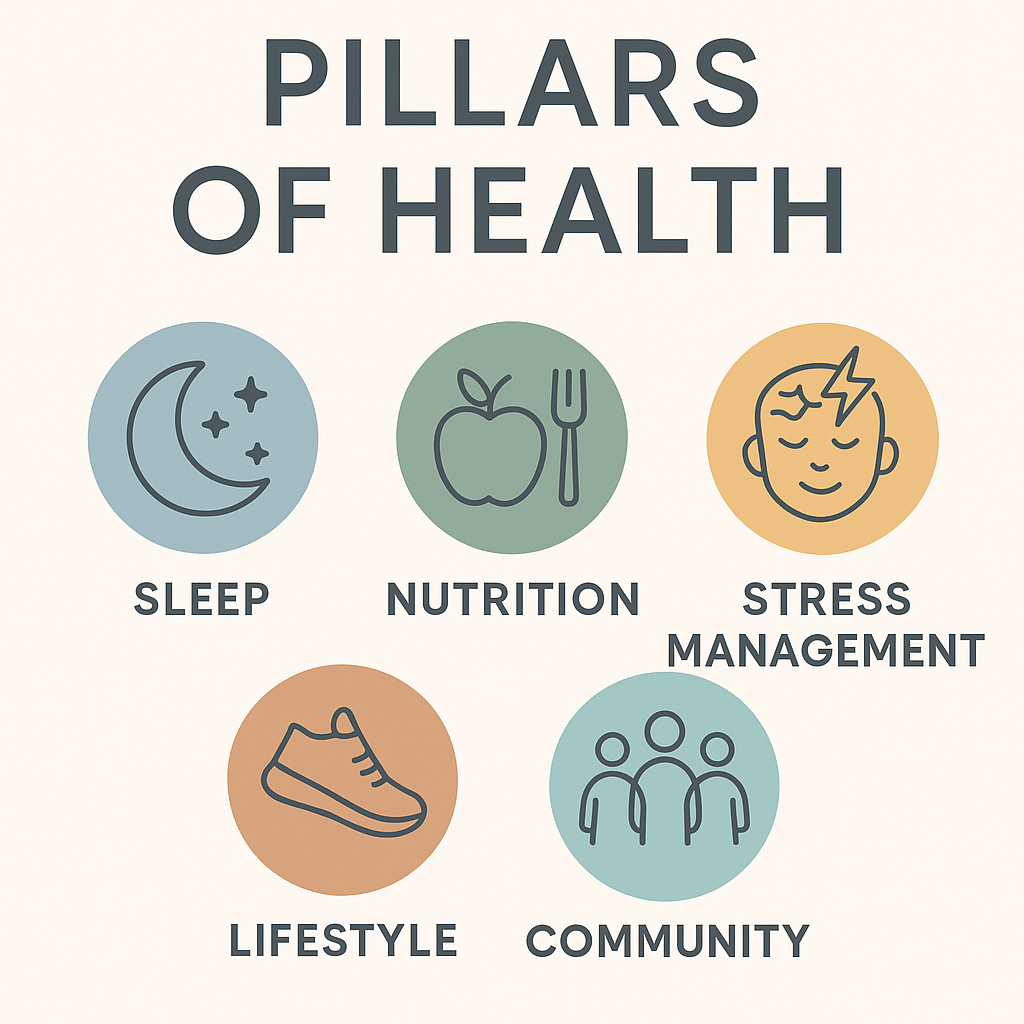
This is a core philosophy of mine: 90+% of people’s health needs can be improved—or even resolved—by addressing and balancing what I call the pillars of health.
So what are they?
- Sleep
- Nutrition
- Lifestyle
- Stress Management
- Community
From one health professional to another, the language may vary—some might add or group things differently—but you’ll find versions of this framework across many holistic and integrative practices. These five pillars are, in my professional opinion, the foundation of a long-term health plan. They’re also the best place to start when working through chronic conditions, before jumping straight to complex protocols or exotic supplements.
Each of these deserves a deeper dive (and they’ll each get one in future blog posts), but let’s introduce them briefly:
Sleep
Sleep is non-negotiable. It’s when your body and brain repair, reset, and regenerate. Chronic sleep issues are linked to everything from mood disorders to blood sugar imbalances. The best keyword to search if you’re having trouble? Sleep hygiene. You’ll find plenty of science-backed strategies to help troubleshoot and improve your sleep quality.
Nutrition
You are what you eat—quite literally. Every cell in your body is made from the food you consume. (Fun fact: most cells in the human body are replaced every 7 to 10 years.) While there’s no universal “perfect diet,” some principles are nearly universal: nutrition matters, overeating is a common contributor to chronic disease, and whole foods generally beat food products in every way.
Lifestyle
How you live—how you move, rest, and spend your time—has a powerful impact on health. I know I feel my best when I’ve exercised regularly and spent time outdoors, and the research backs that up. Movement and nature both reduce inflammation, boost mood, and support immune function. A healthy lifestyle isn’t a single habit—it’s the rhythm of your daily choices.
Stress Management
Modern life runs fast—and it shows up in the body. Chronic stress increases the risk of nearly every major health issue, and often disrupts other pillars like sleep and dietary choices. Whether it’s breathwork, therapy, walks in the woods, or setting better boundaries, finding your way to manage stress is essential, not optional.
Community
This one surprises people—but it’s vital. A sense of connection and belonging isn’t just emotionally nourishing; it’s physiologically protective. Studies on centenarian “Blue Zone” populations show that tight-knit communities correlate strongly with longevity and life satisfaction. In the often-isolating landscape of modern American life, rebuilding community is real health work.
Why Pillars?
They’re called pillars because they support one another. When you’re consistently tending to even one area of your health, you often feel better—and that momentum makes it easier to show up for yourself in other ways too. For example, regular exercise—a lifestyle choice—can significantly reduce stress. And with less stress, it becomes easier to sleep well, make nourishing food choices, and engage with community. It’s all connected.
Final Note
To be clear: there are specific conditions that need specific interventions. Antibiotics have their place. Supplements and pharmaceuticals can be crucial tools. And yes, sometimes you might just need vitamin C because you’ve unknowingly been living the life of a pirate. But for most people, most of the time, real, lasting health begins by tending to these five pillars.
Stay tuned—I’ll be exploring each of these pillars in more depth in upcoming posts.

 Dunbar Acupuncture And Wellness